

A digital birthday memory board is a collaborative online space that consolidates photos, videos, and personal messages from multiple contributors into one cohesive, interactive birthday tribute. Think of it as a living scrapbook that dozens of people can build together, from anywhere in the world, without a single envelope or postage stamp. Unlike a group text that disappears into a chat thread or a social media post that gets buried in a feed, a digital memory board stays organized, permanent, and deeply personal. Platforms like Kudoboard, Canva, and Happy-milo's Happy Wall have made this format accessible to anyone planning a birthday celebration from a distance.
What is a digital birthday memory board and how does it work?
A digital memory board is the online equivalent of a framed photo collage, except it moves, plays video, and accepts contributions from 50 people at once. The core concept is simple: one organizer creates a board, shares a link with friends and family, and contributors add their own photos, videos, and written messages at their own pace. The birthday person receives access to the finished board as a gift.
Popular platforms for this format include Canva, Adobe Spark, Pic Collage, and Kudoboard. Each offers customizable templates, easy link sharing, and multimedia support. Happy-milo's Happy Wall goes further by adding virtual animations and fireworks, turning the viewing experience into a mini celebration of its own.
Here is what a well-built digital birthday memory board typically includes:
- Multimedia uploads: Photos, short video clips, voice messages, and GIFs all in one place
- Collaborative messaging: Multiple contributors add content without seeing each other's submissions in advance, which keeps the surprise intact
- Themed templates: Pre-designed layouts organized around milestone birthdays, travel memories, or career achievements
- Interactive elements: Virtual flaps that open to reveal messages, chronological timelines, and animated transitions
- Flexible sharing: The finished board is shared via a private link, QR code, or embedded directly into a video call
Compare that to the alternatives:
| Method | Contributors | Organization | Permanence | Cost |
|---|---|---|---|---|
| Physical card | 1 to 5 | Fixed | High (tangible) | Low |
| Group text | Unlimited | Poor | Low | Free |
| Social media post | Unlimited | Poor | Low | Free |
| Digital memory board | Unlimited | High | High (exportable) | Free to $150 |
The digital board wins on organization and scale. A group text collapses under 40 replies. A digital board holds 40 contributions and presents them beautifully.
What are the best practices for creating an engaging memory board?
The most effective digital birthday memory boards are curated, not crowdsourced. Quantity does not equal quality. Aim for 10 to 15 impactful memories rather than 50 generic "Happy Birthday!" posts. Curated poignant moments create far more emotional resonance than exhaustive photo archives.
The single biggest upgrade you can make is replacing open-ended invitations with specific prompts. Strong contributor prompts like "What is your funniest memory with Sarah?" or "When did you first realize you could count on Marcus?" produce stories that make the birthday person laugh, cry, and feel genuinely seen. Generic prompts produce generic messages.
Pro Tip: Send contributors two or three specific prompt options rather than one open question. People respond faster and write more when they have a clear starting point.
Here are the design principles that separate memorable boards from forgettable ones:
- Balance images with short text. One-sentence memories paired with high-quality images hit harder than long paragraphs. Keep written contributions to two or three sentences maximum.
- Organize by theme, not just chronology. Group content into three to five themes such as childhood, travel, or work life. Thematic organization significantly improves how the birthday person navigates and enjoys the board.
- Choose a template that matches the person's personality. A minimalist black-and-white layout suits a different person than a confetti-filled, bright-color design. Canva and Happy-milo both offer templates across a wide style range.
- Include at least one video message. A 30-second video from a close friend or family member adds an emotional dimension that photos alone cannot replicate.
- Limit contributor count to what you can manage. Twenty thoughtful contributors produce a better board than sixty rushed ones.
Design experts confirm that the emotional "wow factor" comes from diverse voices balanced with meaningful short text, not from sheer volume of content. Less, done well, always wins.
How to plan and coordinate a digital birthday memory board project
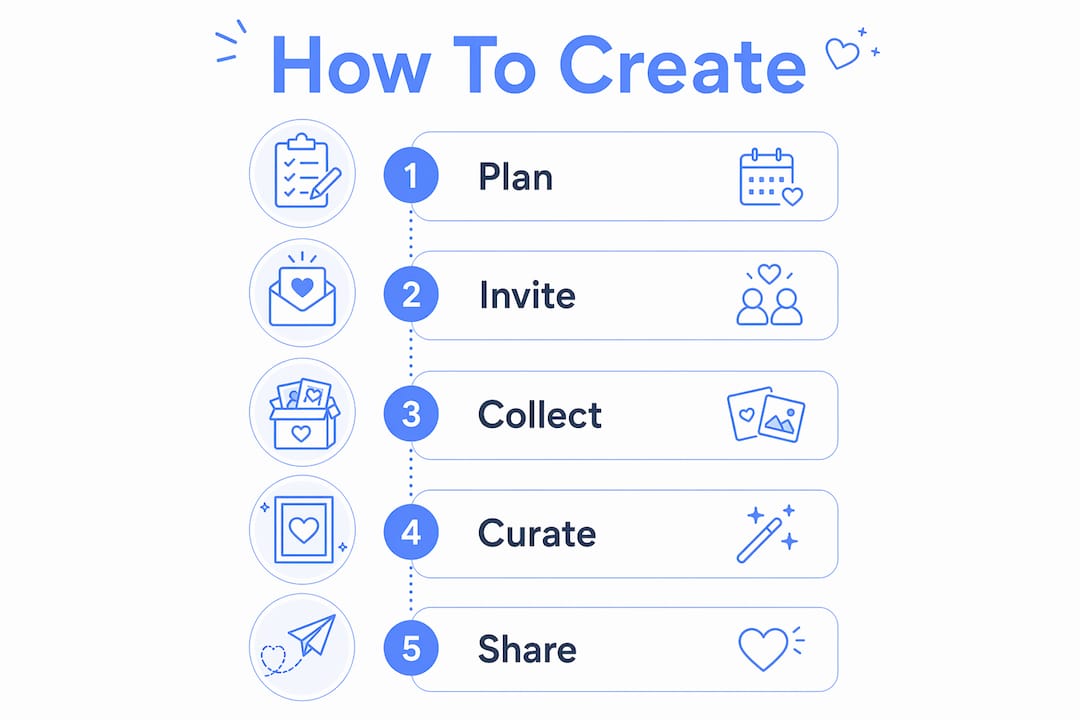
Start four weeks before the birthday. That timeline gives you enough runway to invite contributors, chase follow-ups, and finalize the design without rushing. Planning a quality board typically requires two to four weeks, and organizers spend one to two hours on project setup and contributor follow-ups.
Here is a step-by-step coordination plan:
- Week 1: Choose your platform and create the board. Set up the board, select a template, and write your contributor prompts before sending a single invitation. Doing this first means contributors land on a polished, clear experience rather than a blank page.
- Week 1: Send invitations with a deadline. Give contributors a firm submission deadline of at least five days before the birthday. Include your specific prompts in the invitation message.
- Week 2: Send one follow-up reminder. A single reminder three days before the deadline recovers most late submissions without feeling pushy.
- Week 3: Review and moderate content. Remove duplicates, fix formatting inconsistencies, and check that all media files load correctly. This step takes longer than most organizers expect.
- Week 4: Finalize and share. Send the board link to the birthday person on their actual birthday for maximum impact.
Using a dedicated platform eliminates the coordination chaos that kills group text and email-based projects. A structured platform keeps all submissions in one place, tracks who has contributed, and prevents the organizer from drowning in a flood of WhatsApp attachments.
Pro Tip: Use Happy-milo's event scheduling tool to set automated reminders for contributors. It removes the awkward task of manually chasing people you know personally.
One step most organizers skip: exporting the finished board. Digital boards risk becoming lost clutter unless you export them as a print-ready PDF or physical photo book. A printed version becomes a keepsake that lasts decades. The digital version alone depends on a platform staying online.
How do digital birthday memory boards compare to other celebration methods?
A digital memory board is not the right tool for every situation, but it outperforms every alternative when distance, scale, or personalization is the priority.
Physical scrapbooks and memory albums are tactile and permanent, but they require one person to do all the creative work. They cannot accept contributions from 30 people across 10 countries. A digital board solves that coordination problem entirely. Asynchronous collaboration lets contributors reflect and share thoughtful stories rather than rushed comments, which produces better content than any real-time format.
Social media posts feel public and impermanent. A birthday post on Instagram collects likes and a few comments, then disappears from the feed within 24 hours. A digital memory board is private, organized, and accessible whenever the birthday person wants to revisit it.
| Celebration method | Personalization | Collaboration | Cost | Longevity |
|---|---|---|---|---|
| Physical scrapbook | Very high | Very low | Medium | Very high |
| Social media post | Low | High | Free | Very low |
| Group text | Low | High | Free | Very low |
| Digital memory board | Very high | Very high | Free to $150 | High (with export) |
| Traditional card | Medium | Low | Low | Medium |
The cost range for digital boards is worth noting. Free tiers on platforms like Canva and Kudoboard cover most basic needs. Premium features, including HD video uploads, custom domains, and print exports, range from $20 to $150 depending on the platform. For a milestone birthday like a 50th or 70th, that investment is trivial compared to the emotional return.
Digital memory boards are the clear choice when the guest list spans multiple cities, when the birthday person values memories over material gifts, or when you want something that feels more personal than a store-bought card but more scalable than a handmade scrapbook.
Key takeaways
A digital birthday memory board is the most scalable and emotionally resonant way to celebrate a birthday when contributors are spread across different locations, combining multimedia content, thematic organization, and asynchronous collaboration into one permanent tribute.
| Point | Details |
|---|---|
| Core definition | A digital memory board is a collaborative online space collecting photos, videos, and messages into one birthday tribute. |
| Best content strategy | Aim for 10 to 15 curated memories with specific contributor prompts rather than open-ended birthday wishes. |
| Planning timeline | Start four weeks out, send invitations with firm deadlines, and allow one week for review and moderation. |
| Export for permanence | Always export the finished board as a PDF or physical print to preserve memories beyond the platform's lifespan. |
| Platform choice matters | Dedicated platforms like Happy-milo's Happy Wall prevent coordination chaos and keep all contributions organized. |
Why digital memory boards changed how I think about birthday celebrations
I used to believe the physical card was irreplaceable. There is something about holding a piece of paper signed by people you love that feels real in a way a screen cannot match. I still believe that. But I also know that most physical birthday cards collect five signatures, sit on a mantelpiece for a week, and end up in a drawer.
The first time I saw a well-executed digital memory board, it had 34 contributors, a video from someone who had moved to New Zealand three years earlier, and a photo from 1987 that the birthday person had never seen before. That is not something a card can do.
What I have learned from watching people create and receive these boards is that the organizer's effort is the gift. The platform is just the container. When you send specific prompts, chase contributors, and curate the final result, the birthday person feels that care. When you send a generic link and hope for the best, the board reflects that too.
My honest advice for first-time organizers: do not try to include everyone. Invite the people who will actually contribute something meaningful, and give them a clear prompt and a firm deadline. A board with 15 heartfelt entries beats a board with 60 generic ones every single time.
One more thing: print it. The digital version is wonderful for the birthday, but a physical photo book made from the board's content becomes a 20-year keepsake. The digital and physical formats are not competitors. They are partners.
— Milo
Celebrate together with Happy-milo's Happy Wall
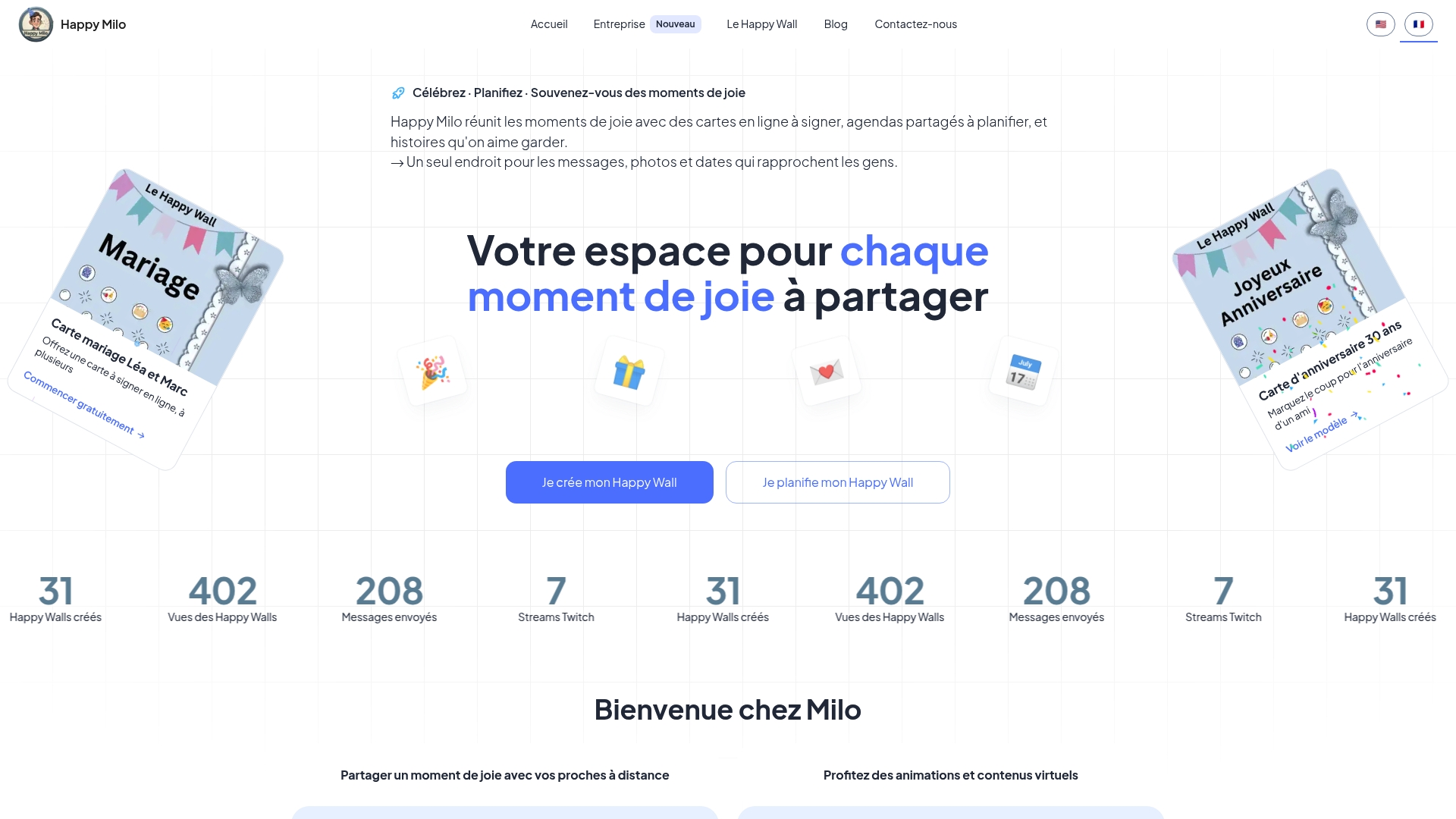
Happy-milo's Happy Wall is built exactly for moments like this. You create a wall, share the link with friends and family, and everyone adds their photos, messages, and memories at their own pace. There is no limit on contributors, no technical setup required, and the result is a living, animated celebration that the birthday person can revisit whenever they want. Virtual fireworks and animations make the reveal feel like a real party. Whether you are celebrating a milestone birthday, a farewell, or a wedding, Happy-milo turns distance into something that feels like closeness. Start your Happy Wall today and give a gift that no store can sell.
FAQ
What is a digital birthday memory board?
A digital birthday memory board is a collaborative online platform where friends and family contribute photos, videos, and written messages to create a single, organized birthday tribute. It serves as a modern alternative to physical cards and group texts by allowing unlimited contributors and persistent, shareable organization.
How many people can contribute to a digital memory board?
Most dedicated platforms support unlimited contributors, making digital memory boards ideal for large friend groups, families spread across multiple cities, or workplace teams. Platforms like Kudoboard and Happy-milo's Happy Wall have no hard cap on the number of submissions.
How far in advance should I start planning a digital birthday memory board?
Start two to four weeks before the birthday. This gives contributors enough time to submit thoughtful content and gives you time to review, moderate, and finalize the board before the big day.
Are digital birthday memory boards free to create?
Most platforms offer a free tier that covers basic features like photo uploads and text messages. Premium features such as HD video, custom templates, and print exports typically range from $20 to $150 depending on the platform and the scope of the project.
How do I make sure contributors send meaningful messages?
Replace open-ended invitations with specific prompts. Questions like "What is your funniest memory with this person?" or "When did you first know you could count on them?" produce far richer, more personal responses than a generic request for birthday wishes.