


Virtual walls are online platforms that let any number of people contribute messages, photos, and videos to a shared digital space, replacing the single-sender model of traditional greeting cards. The shift from paper to digital is not just about convenience. It is about solving real problems: postal delays, missed signatures, and the impossibility of gathering a distributed group around one card. Platforms like Happy-milo's Happy Wall make this possible by enabling unlimited group contributions for birthdays, farewells, weddings, and workplace milestones. Understanding why virtual walls replace greeting cards means understanding how modern relationships actually work, across cities, time zones, and busy schedules.
Why virtual walls replace greeting cards: the core case
Virtual walls solve problems that paper cards cannot. A physical card requires one person to buy it, carry it, collect signatures in person, and mail it on time. Each of those steps is a point of failure. The card arrives late, or not at all. Three colleagues miss the signing because they work remotely. The recipient gets a card with four names when twenty people wanted to contribute.
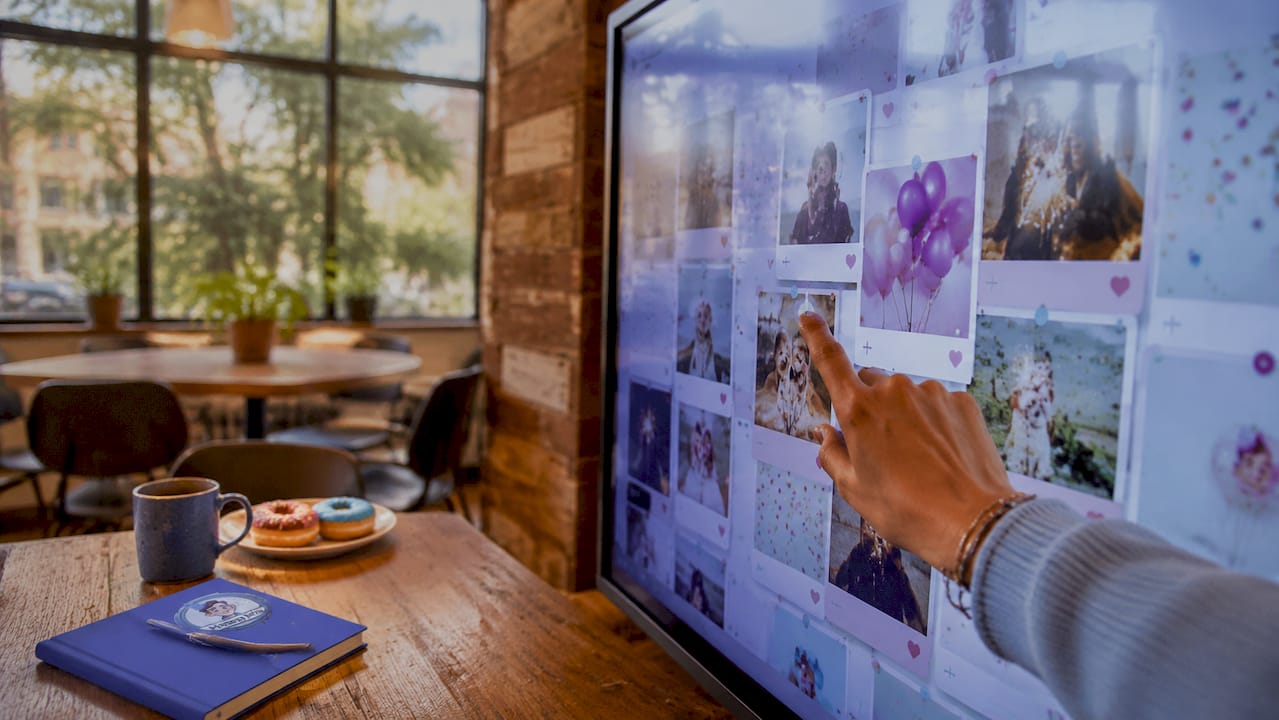
Digital greeting solutions handle the vast majority of recurring recognition moments because they support multimedia content and unlimited contributors. That is not a minor upgrade. It changes who gets to participate and how meaningful the result feels.
Virtual walls also solve the timing problem. A paper card depends on the postal system and one coordinator's schedule. A digital wall stays open for contributions until the organizer closes it, and automated reminders pull in people who would otherwise forget. The recipient receives everything at once, on the right day, from everyone who matters.
The term "virtual wall" is the informal, widely used name for what the industry also calls a digital group card or collective greeting platform. Both terms describe the same thing: a shared online space where multiple people leave personal messages for one recipient.
How virtual walls overcome the limits of traditional cards
Physical greeting cards carry a hidden coordination cost that most people underestimate. Getting twenty people to sign one card means passing it around an office, chasing down remote workers, and hoping it arrives before the birthday. Group ecards eliminate the "herding cats" problem of coordinating signers across different locations and schedules.
Here is what virtual walls fix that paper cards cannot:
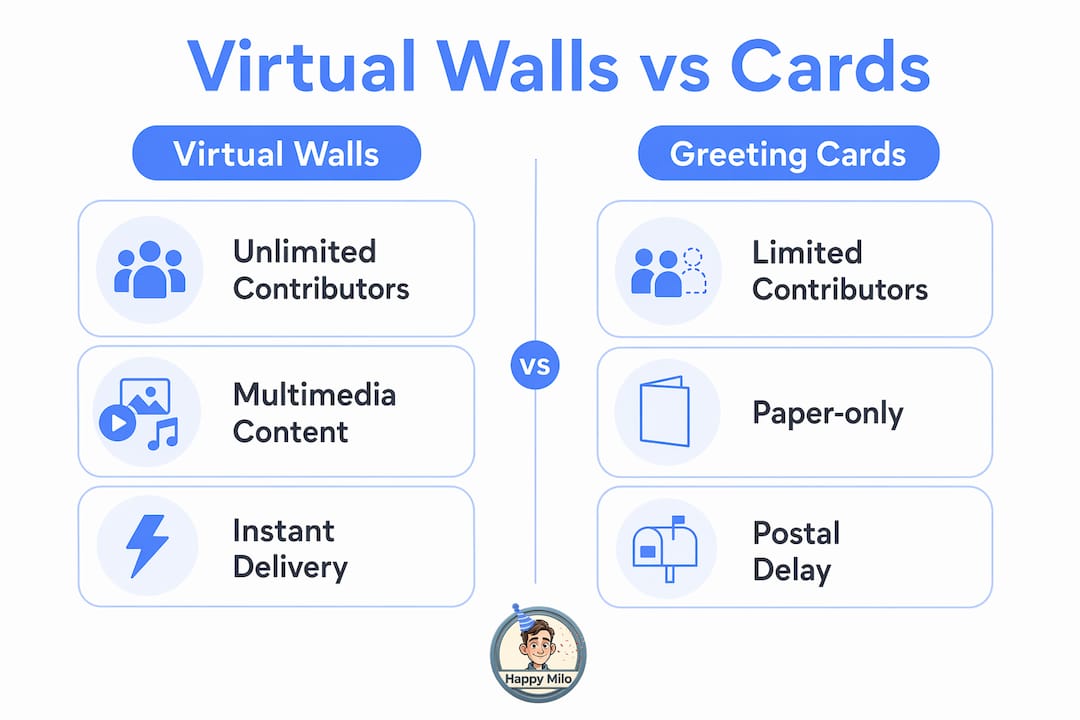
- Postal delays and lost cards. A physical card mailed across the country can arrive days late or not at all. A digital wall delivers instantly, on the exact date you choose.
- Missed contributors. Remote team members, overseas family, and friends in different time zones can all add their message asynchronously, without anyone needing to coordinate a handoff.
- Limited space. A paper card holds a fixed number of signatures. A virtual wall holds contributions from an unlimited number of people, each with their own photo, video, or written note.
- Last-minute exclusions. When someone is added to a team after the card is already circulating, they miss out. Virtual walls stay open until the organizer closes them.
- No automated reminders. Paper card coordinators rely on memory and goodwill. Digital platforms send automatic reminders, so no one forgets to contribute.
Online celebration cards are replacing paper specifically because of geography, schedule constraints, and the impracticality of physical card rituals in distributed teams. That trend is accelerating as remote work becomes standard rather than exceptional.
Pro Tip: Use a virtual wall for workplace recognition events like retirements and farewells. Set a contribution deadline three days before the event, send one automated reminder, and you will get full team participation without a single follow-up email.
Virtual walls vs greeting cards: emotional and experiential value
The emotional case for virtual walls is stronger than most people expect. A paper card carries tactile warmth: the weight of the card stock, a handwritten note, something you can hold. That quality is real and should not be dismissed. For intimate milestones like a grandparent's 90th birthday or a close friend's wedding, a handwritten card still carries unique sentimental weight.
But virtual walls offer something paper cards cannot: a collective memory built from many voices, photos, and moments. When twenty friends each add a photo and a personal message, the result is closer to a scrapbook than a card. Digital cards integrate photos, video clips, and richer multimedia, creating more engaging and personal experiences than paper cards can deliver.
The comparison below shows where each format wins:
| Feature | Virtual wall | Paper greeting card |
|---|---|---|
| Number of contributors | Unlimited | Limited by physical space |
| Multimedia content | Photos, videos, audio, animations | Text and static images only |
| Delivery speed | Instant, scheduled to the minute | Dependent on postal service |
| Keepsake value | Saveable, shareable, permanent link | Tactile, physical object |
| Accessibility for remote contributors | Full participation from anywhere | Requires physical presence or mailing |
| Environmental impact | Minimal | Paper, ink, envelope, transport |
The best impact depends on context. Digital walls win on inclusivity, speed, and collaborative content. Paper cards retain value for intimate, tactile milestones. The smartest approach is knowing which occasion calls for which format, and using both when it makes sense.
Virtual walls preserve the warm intention of handwritten correspondence when contributors take care and add personal detail. The medium evolved, but the intention stays the same. A thoughtful digital message is not less sincere than a handwritten one. It is just delivered differently.
Pro Tip: Treat your digital message like a handwritten note. Use the recipient's name, reference a shared memory, and add a personal photo. That level of care makes a virtual wall feel just as warm as anything written on paper.
Environmental and cultural trends driving digital greetings
The environmental case for virtual walls is clear and growing. Paper greeting cards generate waste at every stage: paper production, ink, envelopes, transport emissions, and a significant share of cards that are never delivered or are discarded shortly after receipt. The environmental impact of paper cards includes waste streams from all of these sources, and digital greetings reduce this waste significantly.
Businesses with ESG commitments treat digital greeting cards as the better choice, not just the cheaper one. Companies report ESG metrics by tracking how many digital sends replaced physical cards, showing concrete sustainability impact over time. That small habit compounds into a meaningful environmental record across a year of birthdays, retirements, and team milestones.
The cultural shift is just as significant. Communication norms have moved toward instant, multimedia, and mobile-first formats. People share video messages on WhatsApp, post photo collages on Instagram, and expect digital experiences to feel personal and rich. A plain paper card with a few signatures feels thin by comparison when the recipient's phone can display a video message from a friend in another country.
| Trend | Impact on greeting card habits |
|---|---|
| Remote and hybrid work | Distributed teams cannot pass a physical card around the office |
| ESG corporate commitments | Businesses replace paper cards with digital alternatives to meet sustainability goals |
| Smartphone and video culture | Recipients expect multimedia, not just text |
| Instant communication norms | Postal delays feel out of step with how people communicate |
| Digital literacy growth | Older and younger generations alike are comfortable with digital platforms |
ESG-focused businesses prefer digital greeting cards as a default to build consistent, inclusive, and eco-friendly corporate culture. This is not a fringe trend. It is a mainstream shift that shows up in how companies celebrate their people.
How to use virtual walls effectively for any occasion
Getting the most from a virtual wall comes down to a few deliberate choices. The platform, the setup, and the way you invite contributors all shape the final result.
-
Choose the right platform for your occasion. A birthday among close friends calls for something playful and personal. A workplace farewell needs a platform that handles large contributor lists and looks professional. Happy-milo's Happy Wall supports both, with options for personal celebrations and enterprise team milestones.
-
Set a clear contribution deadline. Open-ended walls get fewer contributions. Tell contributors exactly when the wall closes, and send one reminder two days before. Most platforms automate this step.
-
Seed the wall with your own contribution first. When contributors open a wall and see it already has messages, photos, and personality, they are more likely to add something meaningful. An empty wall feels like a blank page. A wall with three or four contributions feels like a celebration already in progress.
-
Mix media types intentionally. Ask some contributors to add a photo, others to record a short video, and others to write a message. Variety makes the final wall feel like a real scrapbook rather than a list of text notes.
-
Add animations and personal touches before delivery. Platforms like Happy-milo let you add virtual fireworks, confetti animations, and custom themes. These details signal effort and make the recipient feel genuinely celebrated.
-
Pair the virtual wall with a physical gesture when the occasion calls for it. For a retirement or a wedding, print a QR code that links to the wall and include it in a physical card or gift bag. The recipient gets the tactile keepsake and the full multimedia experience.
-
Use the shared agenda feature to stay ahead of important dates. Happy-milo's shared agenda reminds you of upcoming birthdays, anniversaries, and farewells so you never miss a moment to celebrate someone you care about.
The occasions best suited to virtual walls include birthdays with geographically scattered friends, workplace farewells for remote teams, wedding congratulations from large guest lists, baby showers where contributors cannot attend in person, and anniversary celebrations for couples with friends across multiple cities.
Digital cards increase inclusivity by allowing remote participants to contribute messages asynchronously, bypassing time zone and scheduling challenges. That inclusivity is the single biggest reason virtual walls win for group celebrations.
Celebrate together with Happy-milo's Happy Wall
Happy-milo makes it easy to bring everyone together for the moments that matter most. The Happy Wall is a shared digital space where friends, family, and colleagues can each leave a personal message, upload a photo, or record a video, no matter where they are in the world. You can add virtual fireworks and confetti animations to make the delivery feel like a real celebration. A built-in shared agenda keeps you on top of upcoming birthdays, farewells, and milestones so nothing slips by.
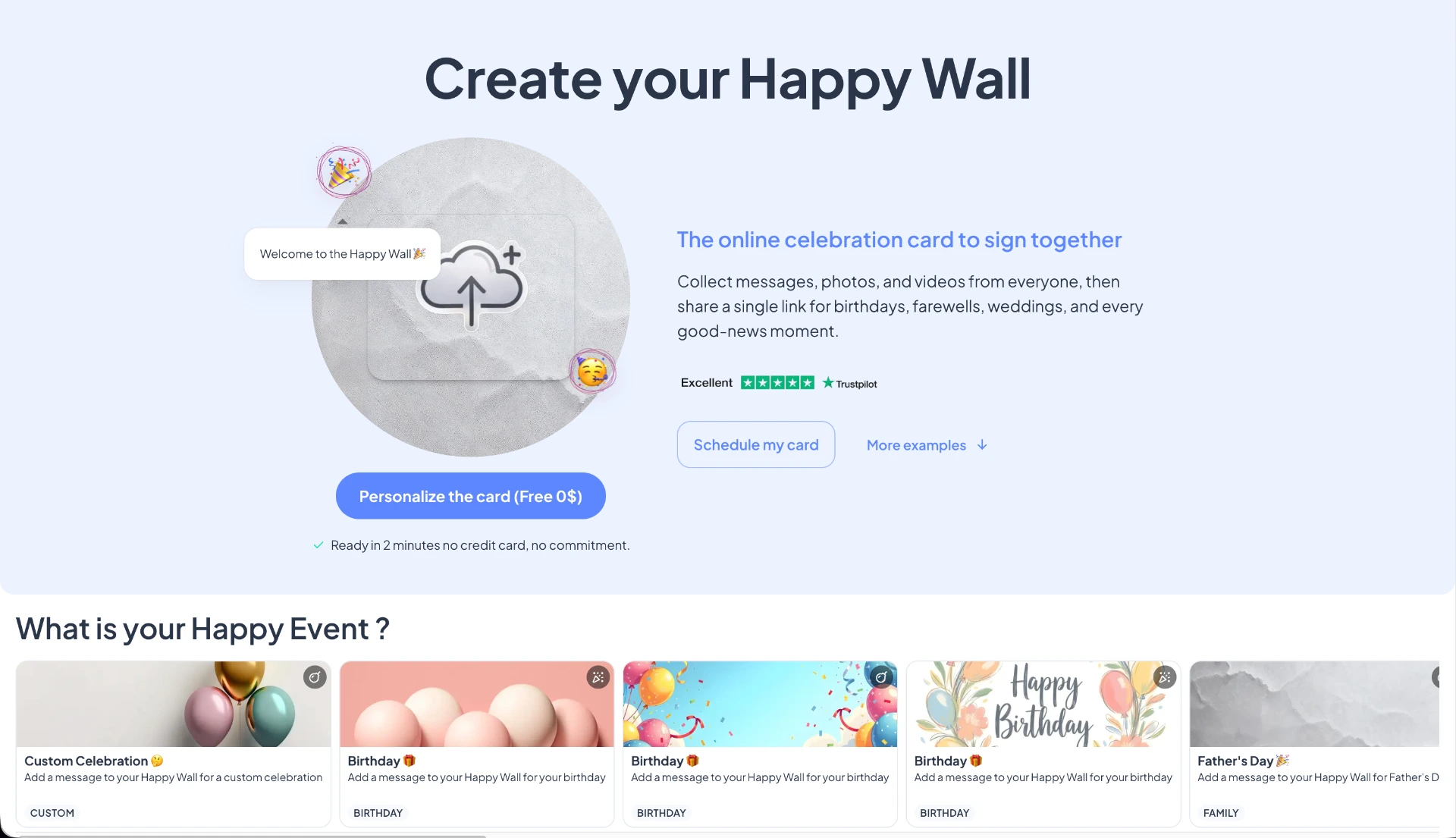
Whether you are celebrating a birthday, sending off a colleague, or marking a wedding, Happy-milo gives every contributor a voice and every recipient a memory worth keeping. Create your Happy Wall today and turn your next group celebration into something truly special.
Key takeaways
Virtual walls replace greeting cards because they solve the core problems of coordination, inclusion, and multimedia depth that paper cards cannot address.
| Point | Details |
|---|---|
| Coordination is solved | Virtual walls let unlimited contributors add messages asynchronously, removing the need to pass a physical card around. |
| Multimedia beats plain text | Photos, videos, and animations create a richer, more personal experience than a signed paper card. |
| Environmental benefits are real | Digital greetings eliminate paper, ink, envelope, and transport waste at every occasion. |
| Context still matters | Paper cards retain value for intimate, tactile milestones; virtual walls win for group and remote celebrations. |
| Platforms like Happy-milo make it simple | Built-in reminders, animations, and shared agendas remove every logistical barrier to celebrating together. |
FAQ
What is a virtual wall for celebrations?
A virtual wall is a shared online space where multiple people contribute messages, photos, and videos as a collective greeting for one recipient. Platforms like Happy-milo's Happy Wall let an unlimited number of contributors participate from anywhere in the world.
Are virtual walls better than greeting cards?
Virtual walls outperform paper cards for group celebrations, remote teams, and multimedia personalization. Paper cards retain an edge for intimate, tactile milestones where a physical keepsake matters most.
How do virtual walls help remote teams celebrate together?
Virtual walls enable asynchronous contributions, so team members in different time zones can each add a personal message without scheduling a shared moment. Automatic reminders prevent late deliveries and ensure full participation.
What occasions work best for a virtual wall?
Birthdays, workplace farewells, weddings, baby showers, and anniversaries are all ideal. Any occasion where contributors are geographically scattered or where a large group wants to participate is a strong fit for a digital group card.
Do digital greetings have an environmental advantage?
Yes. Paper greeting cards generate waste from paper, ink, envelopes, and transport at every step. Digital greetings reduce this waste significantly and align with ESG commitments that businesses and individuals increasingly prioritize.