


Farewell Card Messages for Coworkers: Ready Templates & Group Tips
Write a brief thank-you that names one specific memory or contribution, states the person’s last day or contact info, and closes with a warm sign-off matched to how close you actually are. Those three pieces cover what a good farewell message needs: gratitude, a detail that proves you paid attention, and a way to stay in touch. Everything else, tone, length, humor, is just adjusting the volume knob.
Table of Contents
- What to Write in a Farewell Card: Quick Tips
- Short and Sweet Messages for Group Cards
- Heartfelt Farewell Messages and Templates
- Funny Farewell Messages That Still Land Well
- What to Say to a Manager or Mentor
- What to Say to a Close Friend or Colleague
- Ready-to-Use Farewell Card and Email Templates
- How to Close, Sign Off, and Leave Contact Info
- When One Card Isn’t Enough: Collaborative Farewell Cards
- Sources
- FAQ
What to Write in a Farewell Card: Quick Tips
Getting the tone right matters more than getting the words right. A group card for someone you barely worked with should read differently than a note to the coworker who trained you your first week.
Start by sizing up the relationship. For a team-wide card signed by a dozen people, two or three warm sentences are plenty, you don’t need to compete for space. For a one-on-one card to a close colleague, you have room to slow down and tell a small story. And when you’re writing to a manager, professionalism still matters even if the friendship is real; skip the inside jokes and lean on genuine acknowledgment instead.
Whatever the format, aim to include:
- A specific thank-you (not just “thanks for everything”)
- One memory, project, or trait that made them memorable to work with
- Their last working day, if the card is going around before they leave
- A way to reach them later, if you want to stay connected
Timing matters more than people realize. The strongest window to pass a card around or send it is the day before someone’s last shift or the morning of it, giving enough lead time for colleagues to sign without the card sitting forgotten in a drawer for a week.
A few things to leave out entirely: complaints about the company, vague promises like “let’s totally keep in touch” with no actual plan to do so, and inside jokes that only make sense to two people in a group card everyone else will read. If the person is leaving under rough circumstances, layoffs, a difficult exit, keep the public message short and kind, and save anything more complicated for a private conversation.
Pro Tip: If you’re stuck on what to say, picture one five-second memory of that person, a joke they made, a time they helped you, a habit you’ll miss, and build your entire message around it. Specific always beats generic.
Short and Sweet Messages for Group Cards
When ten people are signing one card, nobody needs an essay. These lines work well in a group card or as a quick standalone note.
Warm and simple:
- “You made every Monday a little more bearable. Good luck out there!”
- “So grateful our paths crossed at work. Go do great things.”
- “This place won’t be the same without you. Onward and upward!”
- “Thanks for the laughs, the help, and the good energy. We’ll miss you.”
- “Wishing you every good thing on the next chapter.”
Professional and polished:
- “It’s been a genuine pleasure working alongside you. Best of luck in your next role.”
- “Your work here made a real difference. Congratulations on the new opportunity.”
- “Thank you for your dedication and collaboration. Wishing you continued success.”
- “You’ve earned this next step. All the best moving forward.”
- “Grateful for your leadership and guidance. Go make an impact.”
Casual, for close coworkers:
- “Who’s going to steal my snacks now? Miss you already.”
- “You survived working with all of us, that alone deserves an award.”
- “Take the good stories with you. Leave the bad coffee behind.”
- “It’s weird how much I’ll miss our hallway chats. Stay in touch.”
- “You’re leaving big shoes to fill. Go be amazing somewhere else.”
Any of these work fine as-is, or as a starting line before you add your own detail.
Heartfelt Farewell Messages and Templates
A longer message earns its length when it includes a real memory. The strongest heartfelt notes follow a simple order: name something specific, say thank you, then close warmly. That structure alone makes a message land harder than a string of generic compliments ever will.
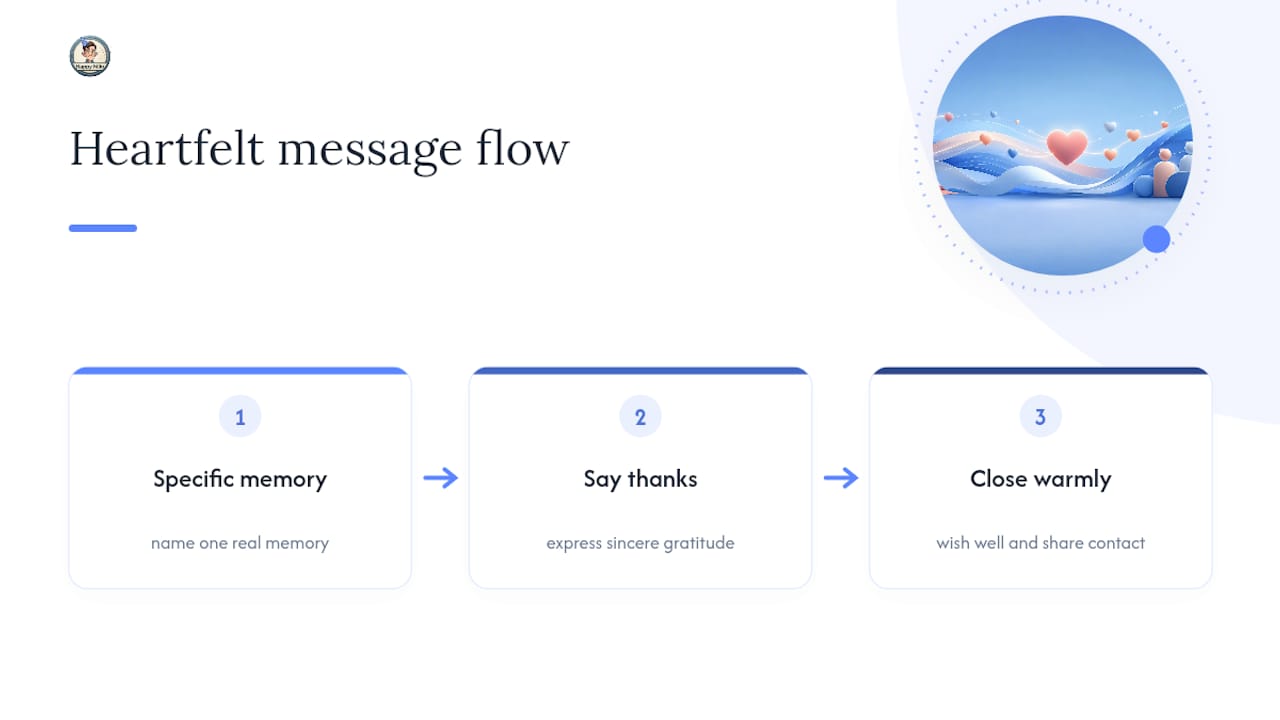
Team-wide template: “From the whole team: thank you for [specific contribution, e.g., ‘always making onboarding less scary for new hires’]. You brought [quality, e.g., ‘patience and humor’] to every project, and honestly, this office is better because you were in it. Wishing you every success starting [last day, if known]. Stay in touch: [contact info].”
Mentor or leader template: “I don’t think I ever told you how much [specific thing they taught you] changed how I work. You made time for people, even when you didn’t have to, and that shaped more of my career than you probably realize. Thank you for everything. I’d love to stay connected: [contact info].”
Retirement or long-tenure template: “After [X years], you’ve built something here that will outlast your last day in this building. I still think about [specific memory or piece of advice] whenever [situation]. Enjoy every bit of what comes next, you’ve absolutely earned it.”
Pro Tip: To personalize any template fast, swap in one real detail: a project name, a phrase they always said, or a moment they helped you through a hard week. That single swap is what turns a template into something that sounds like you wrote it.
Funny Farewell Messages That Still Land Well
Humor works best in group cards when everyone signing knows the person well enough that the joke won’t confuse anyone. Save the inside jokes for a private note instead, since humor that only two people understand tends to fall flat in a card twenty people are reading.
Safe, playful lines for a group card:
- “Congrats on escaping before the next reorg. Well played.”
- “Who’s going to answer my ridiculous questions now? Good luck to your new team, they have no idea what’s coming.”
- “You’ve officially graduated from us. Diploma not included.”
- “Please still answer texts about where you hid the good stapler.”
- “We were going to throw you a parade, but budget cuts. Accept this card instead.”
Keep the joke about the workplace or a shared quirk, never about a person’s performance, appearance, or reason for leaving. When in doubt, write the funny line, read it once more, and ask whether it would still feel kind if the person had a rough week. If not, swap it for something warmer.
What to Say to a Manager or Mentor
Writing to a boss or mentor calls for a slightly different register: warm, but a notch more formal than what you’d write a peer. The goal is acknowledging real impact without drifting into flattery.
- “Thank you for trusting me with [specific project] and for the guidance that came with it.”
- “You made this team a genuinely good place to work. That’s rarer than people think.”
- “I learned more from watching how you handled [situation] than from any training I’ve had.”
- “Wishing you continued success. I’d welcome the chance to stay in touch: [LinkedIn or email].”
- “Your leadership left a mark on how I approach my own work now.”
Balance is the key word here. Thank them personally, but keep specifics about internal decisions or team dynamics out of a card everyone else might see.
What to Say to a Close Friend or Colleague
A close colleague earns something with more texture than a card line, a shared memory, a callback to an old joke, or a mention of a specific hard day they helped you through. If the relationship goes beyond coworkers, consider writing a private note in addition to signing the group card, since a group message rarely has room for anything that personal.
- “I still can’t believe we survived that product launch together. Thank you for every bit of it.”
- “You were the person who made this job feel less like a job. I’ll miss that more than I can say.”
- “From late nights to lunch breaks, you made all of it better. Let’s not lose touch.”
- “You showed up for me more than once, and I won’t forget it.”
Ready-to-Use Farewell Card and Email Templates
Different formats call for different structures. Here are copy-ready options for the most common situations.
- Short card message: “Congratulations on the new chapter, [Name]. Thank you for [one detail]. We’ll miss you!”
- Mid-length card message: “[Name], thank you for [contribution/memory]. You made this team better, and we’re genuinely going to miss having you around. Wishing you the best in everything ahead.”
- Company-wide farewell email: Subject line: “Wishing [Name] well on their next adventure.” Body: a short paragraph thanking them for their contributions, naming their last day, and inviting colleagues to stop by or sign a card.
- One-on-one farewell email: Subject line: “Thank you, and good luck!” Body: a warmer, more personal note referencing shared projects, plus contact details for staying in touch.
A clear, specific subject line matters more than people expect. Vague subjects like “Update” get buried, while something like “Saying goodbye (and thank you!)” gets opened before the person’s inbox access disappears.
How to Close, Sign Off, and Leave Contact Info
Your sign-off should match the tone of everything above it. A few reliable options by register:
- Professional: “Warm regards,” “With sincere thanks,” “Best wishes for your next chapter”
- Friendly: “Take care,” “Talk soon,” “Miss you already”
- Playful: “Don’t be a stranger,” “See you on the other side”
For professional relationships, LinkedIn is usually the safest contact detail to leave. For personal ones, a phone number or personal email invites a more genuine follow-up. Skip “let’s keep in touch!” on its own, it’s the phrase people write when they don’t actually plan to. Naming a specific way to reach you signals you mean it.
When One Card Isn’t Enough: Collaborative Farewell Cards
A single card runs out of room fast once more than a few people want to say something real. A shared digital card lets an unlimited number of coworkers add their own message, photo, or memory in one place, without anyone squeezing a sentence into a margin.
There are digital group card platforms designed for exactly this kind of send-off. A few things they handle that a paper card can’t include:
- Allowing many contributors to add notes
- A countdown to reveal the card together, sometimes with music and animation when it opens
- A printable keepsake option, for those who want a physical memento
If the team is small and everyone already knows what they want to say, a handwritten card still works fine. But for a bigger team, especially one spread across offices or working remotely, a collaborative wall captures more voices than a card ever could, and it keeps every message intact as a lasting keepsake instead of getting lost in a drawer. Enterprise teams that plan frequent farewells or milestones can also set this up through Happy Milo’s team card options, while anyone building a one-off wall can check the pricing and keepsake choices starting at €2.99 for permanent wall access.
Sources
A few resources worth bookmarking if you want to go deeper on farewell wording:
- How to Write a Goodbye Message When Leaving a Job (Grammarly)
- Farewell email guide & templates for 2026 | Michael Page
FAQ
What is the best farewell message to write?
The best farewell message names one specific memory or contribution, thanks the person sincerely, and includes a way to stay in touch. A message built on gratitude, a detail, and contact info will always beat a generic “good luck” line.
What is a good greeting for a farewell card?
Open with something warm and direct, like “Congratulations on your next chapter” or “It’s been such a pleasure working with you.” Match the opening line’s formality to your relationship with the person before adding your personal note underneath.
What is a good short farewell quote?
Short lines that work well include “Wishing you every good thing on the next chapter” or “This place won’t be the same without you.” Keep it to one or two sentences so it reads naturally in a group card alongside other signatures.
What’s a heartfelt way to say goodbye?
Lead with a specific memory instead of a general compliment, since a concrete detail makes a message far more memorable than broad praise. Follow it with genuine thanks and, if appropriate, an invitation to keep in touch.