
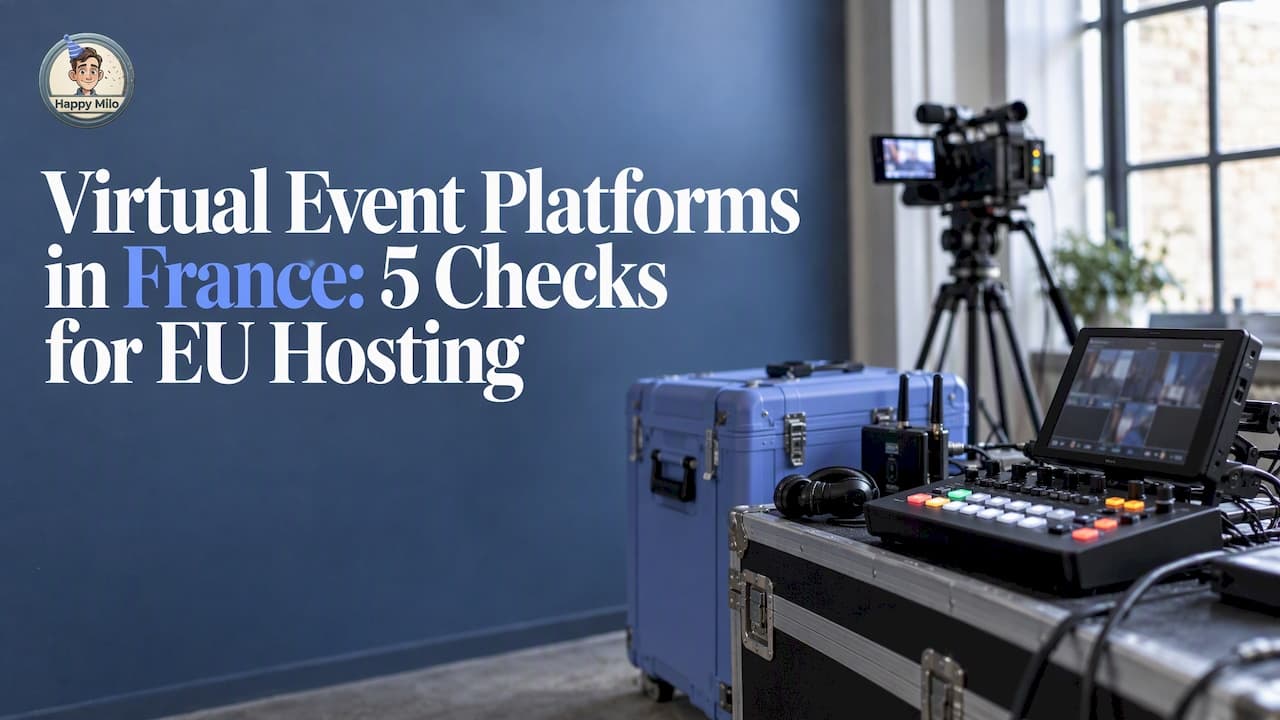

For French audiences in 2026, the strongest choice is almost always an EU-hosted platform with native French support and an integrated event-management suite, built around registration, streaming, and reporting in one place rather than scattered across separate tools. Larger organizations with strict security needs should lean toward enterprise hybrid platforms instead. Either way, the next move is simple: run the vendor checklist below, or request demos and confirm the DPA and French support directly with each provider.
Key Takeaways
For French audiences in 2026, the optimal virtual event platform combines EU hosting, native French support, and integrated management tools to ensure compliance, ease of use, and operational efficiency.
| Point | Details |
|---|---|
| Choose platform type | Match your event goals to the right platform category, such as EU-hosted, enterprise hybrid, webinar, or immersive 3D. |
| Prioritize compliance and support | Confirm hosting location, data agreements, and native French support to reduce operational friction and troubleshooting time. |
| Evaluate vendor readiness | Assess integration capabilities, support models, and support SLAs through tests and side-by-side scoring before choosing. |
| Focus on core features | Ensure reliability, engagement tools, exhibitor options, and technical depth align with your event format and audience. |
| Leverage Happy Milo for shared moments | Use Happy Wall to add memorable shared moments during hybrid events, enhancing attendee engagement beyond the platform. |
Which platform category fits your event?
Not every virtual event needs the same engine. Matching the category to your goals saves budget and prevents late surprises.
- EU-hosted, French-native platforms: best for francophone audiences that need RGPD compliance and local support without friction.
- Enterprise hybrid platforms: best for large conferences with strict security requirements and in-person components.
- Webinar-first platforms: best for frequent, high-volume webinars where speed of setup matters more than visual polish.
- Immersive 3D and virtual-expo platforms: best for trade shows and branded experiences that need booths, avatars, and a show-floor feel.
Review and marketplace data for 2026 confirm this split: webinar-first tools tend to launch fastest, while immersive 3D platforms demand bigger budgets and longer setup windows, and enterprise platforms lead on security and hybrid support, according to G2’s 2026 platform overview. There is no universal winner across categories: the right one depends on your audience size, your security obligations, and how much production support your team can offer the project.
What should actually decide your choice?
Feature lists are tempting, but they rarely predict whether an event runs smoothly. A short, disciplined evaluation process does a better job.
- Confirm hosting location, data processing agreement availability, and native French-language support before anything else.
- Check integration depth with your CRM, marketing automation tools, and RTMP ingestion for multi-camera or hybrid setups.
- Match the vendor’s delivery model to your internal capacity: self-serve SaaS if your team is technical and available, managed or agency support if it is not.
- Ask every finalist about SLA terms, test-run availability, support hours, escalation contacts, and what drives pricing up or down.
- Score each vendor against your top five criteria and compare the totals side by side before signing anything.
There is no single absolute best platform here either; success comes from matching the model, SaaS self-serve versus done-for-you, to your organization’s own resources and technical comfort, a point practitioners stress when scoring vendors across hosting, production support, integrations, engagement features, and pricing, as outlined in Eventdrive’s platform comparison.
Pro Tip: Ask for a live test run with your actual stream setup, not a canned demo. It’s the fastest way to catch latency or ingestion problems before the real event.
Which features actually matter for your event format?
Feature checklists look similar across vendors until you test them against your specific format: webinar, conference, or expo.
- Core reliability: stable streaming and recording, simple registration flows, mobile access, and clear post-event analytics.
- Engagement tools: live Q&A, polls, chat, and attendee networking or matchmaking for larger conferences.
- Exhibitor and monetization features: virtual booths, lead capture forms, and sponsor placement options for trade-show formats.
- Technical depth: RTMP ingestion, multi-stream support, accessibility captions, and reliable replay access after the event ends.
A webinar leans hardest on reliability and registration simplicity. A conference needs networking and robust analytics layered on top. An expo needs booths, lead capture, and sponsor tools working smoothly together, since those features carry the commercial weight of the event. Organizers who prioritize integrated event-management suites over separate siloed tools for registration, email, and reporting tend to run operations with far less friction on event day.
What should you budget, and how long will setup take?
Timelines and costs vary sharply by category, so setting expectations early protects both your calendar and your budget.
- Webinar SaaS platforms: typically launch within days to a couple of weeks, with minimal onboarding required.
- Enterprise and immersive 3D platforms: often need several weeks to a few months for configuration, branding, and integration testing.
- Pricing shapes fall into three common patterns: per-event fees for occasional use, monthly subscriptions for regular webinars, and annual enterprise contracts for continuous programs.
- Cost drivers include white-labeling, dedicated servers, custom integrations, and dedicated production staff on live day.
Entry-level French platform offerings often start with free or low-cost starter tiers, with enterprise pricing climbing well above that depending on scale, a variance confirmed by the Ultiplace pricing comparator. Build in margin for bandwidth spikes, interpretation services if your audience is multilingual, and enough rehearsal time to catch problems before they become live incidents.
Why French support and EU hosting matter more than they seem
For organizations running events aimed at French audiences, localization is not a nice-to-have detail buried in the fine print. It shapes how smoothly the entire event runs.
- EU-based hosting and a signed data processing agreement are baseline requirements for most French organizations handling attendee data.
- Native French support during setup and on live day cuts troubleshooting time when something goes wrong mid-event.
- Security certifications and enterprise-grade safeguards are worth routing through your IT or legal team before signing a contract.
- Localization also shapes attendee experience and exhibitor onboarding, since instructions, forms, and support that read naturally in French reduce confusion on both sides.
Organizers aiming at French audiences should prioritize EU hosting, RGPD compliance, and native French support specifically to reduce that operational friction, a pattern confirmed across platform comparisons in the Ultiplace virtual expo comparison. Teams running events primarily in French tend to resolve live-day incidents faster when their support contact actually speaks the language the event runs in.
Should you run it yourself or hire a production partner?
The choice between self-serve software and a managed production partner comes down to one honest question: how much operational weight can your team actually carry on event day, or should you hire an expert for event video production and repurposing to increase reliability and engagement? The Role of Video in Event Coverage That Converts explains this balance in detail.
Self-serve SaaS costs less and gives you full control, but it also means your team owns every technical risk, from stream drops to last-minute registration issues. A managed partner costs more but brings reliability, dedicated support, and someone else absorbing the pressure when something breaks live. Industry observers distinguish exactly this split, do-it-yourself platforms versus done-for-you managed services, noting that the right call depends on whether you want to protect your budget or offload the operational burden entirely, per Netkin’s production insights.

If you do hire a partner, demand specific deliverables: a scheduled test run, a written runbook for live day, a dedicated project manager, and a backup stream in case the primary feed fails.
How do you move from shortlist to launch day?
A clear week-by-week structure keeps a virtual event on track from the first vendor call to the final follow-up email.
- Define your objectives, shortlist two or three vendors, and run legal and IT checks on hosting and the data processing agreement.
- Sign the contract once pricing and support terms are confirmed in writing.
- Onboard exhibitors or speakers, build the rehearsal schedule, finalize access lists, and arrange interpretation if needed.
- Assign live-day roles, including stream monitoring, a backup feed, and a dedicated support line for attendee issues.
- After the event, export analytics, archive recordings, hand off leads to sales or marketing, and send a follow-up message to attendees.
For teams planning the celebratory side of an event, our guide on organizing a virtual birthday celebration walks through a similar structure applied to a smaller, personal gathering.
Add a shared celebration moment to your event with Happy Milo
A streaming platform handles the technical backbone of your event, but it was never built to capture the warmth of a shared moment, a retiring executive’s send-off, a milestone anniversary, a donor wall thanking contributors by name. That is where we come in, alongside whatever platform runs your main broadcast.
Our Happy Wall lets any group leave messages, photos, and wishes on one shared page, with no cap on how many people join in, and it comes alive with music, confetti, and animation when the moment arrives. It works just as well for a conference speaker’s farewell as it does for a Twitch channel anniversary, as shown in our Twitch celebration wall example built for live chat audiences.
- Use Happy Wall for speaker appreciation, donor recognition, or team milestones during a hybrid event.
- Pair it with Happy Dates to count down to the big moment together.
- Turn the finished wall into a lasting keepsake through our pricing and plans page, starting at €2.99 to remove the wall’s expiration, or a printed Happy Box from €8.00.
Companies running recurring programs, onboarding, farewells, milestones, can explore our enterprise membership at €15 per month. Start a sample wall today and see how a shared moment rounds out your next event.
FAQ
What type of platform works best for French virtual events in 2026?
EU-hosted platforms with native French support and an integrated event-management suite tend to work best for francophone audiences, since they reduce compliance friction and speed up live-day troubleshooting, according to the Ultiplace virtual expo comparison. Larger organizations with strict security demands often do better with enterprise hybrid platforms instead.
How long does it take to set up a virtual event platform?
Webinar-first SaaS platforms can launch within days to a couple of weeks, while enterprise or immersive 3D platforms typically need several weeks to a few months for configuration and testing. The right timeline depends on how much customization and integration your event requires.
What drives the price of a virtual event platform up or down?
Pricing shifts based on white-labeling, dedicated server needs, custom integrations, and whether you need production staff on live day. Entry-level French platforms often offer free or low-cost starter tiers, with enterprise pricing rising well beyond that for larger programs, per the Ultiplace pricing comparator.
Why does native French support matter for live events?
Native French support shortens the time it takes to resolve technical issues during setup and on the event day itself, since attendees and organizers can describe problems clearly in the language the event runs in. This matters most during live troubleshooting, when delays translate directly into disrupted attendee experience.
Should I choose a self-serve platform or a managed production partner?
Choose self-serve SaaS if your team is technical and can absorb operational risk, and choose a managed partner if you want dedicated support, test runs, and backup streams handled for you. The decision should match your team’s actual capacity, not just your budget.
Sources
- Comparatif plateformes — Eventdrive
- G2 learn: Best virtual event platforms (2026 overview)
- Livestorm guidance on virtual event software