
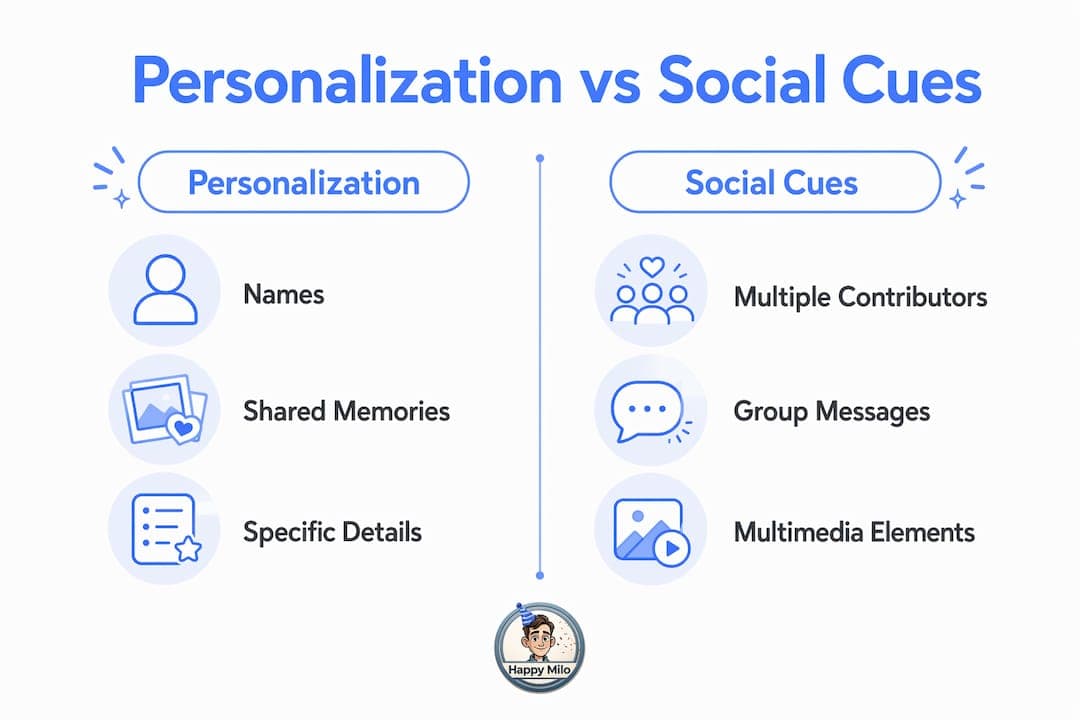

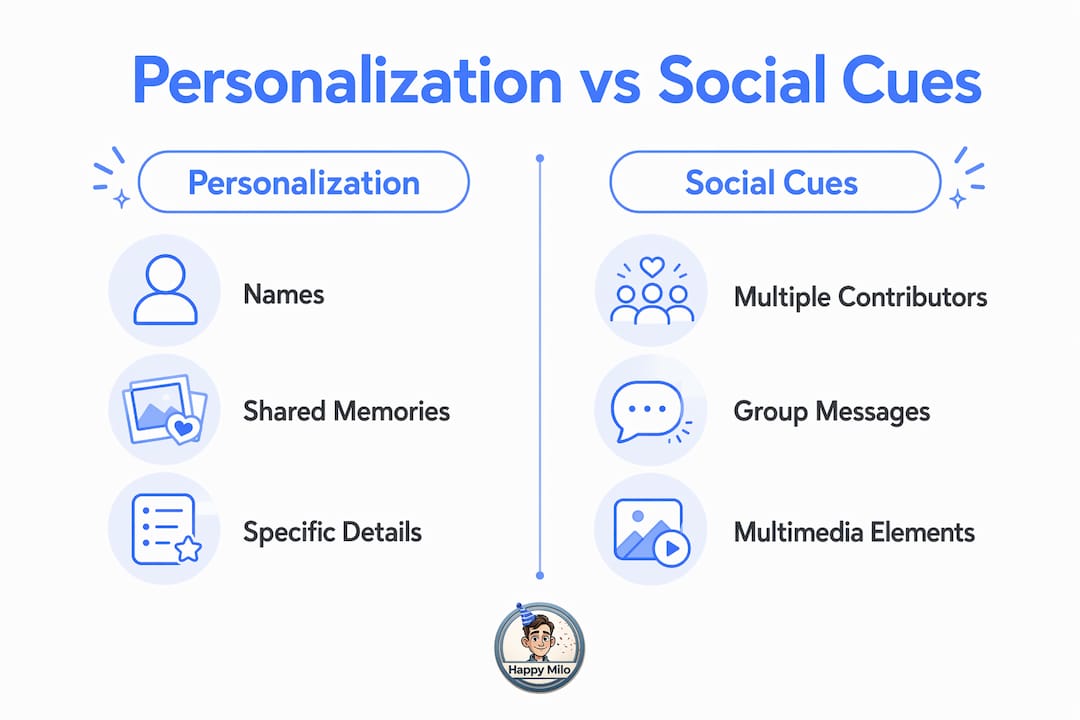
Digital birthdays are defined as personalized, multimedia-driven celebrations delivered through online platforms, and research confirms they create stronger emotional closeness than most traditional greetings. The reason why digital birthdays feel more personal comes down to three forces working together: explicit personalization, social presence, and thoughtful multimedia. A 2026 study on AI personalization found that tailored digital experiences significantly improve trust and emotional engagement. When a birthday message uses your name, references a shared memory, and arrives with a photo collage from people you love, it stops feeling like a notification. It feels like a moment.
How personalization shapes the emotional impact of digital birthday greetings
Personalization is the single biggest driver of emotional resonance in digital birthday messages. A generic "Happy Birthday!" carries almost no weight. A message that opens with your name, references your love of hiking, and includes a photo from last summer's camping trip? That lands differently. The difference is not just warmth. It is perceived effort, and effort signals care.
Research on personalization frameworks makes this distinction clear. The minimal threshold personalization framework defines two types of personalization: explicit (using data the person knowingly shared) and inferred (using data pulled from behavior or third-party sources). Explicit personalization feels warm and trustworthy. Inferred personalization often feels invasive. For digital birthday greetings, this means using what you already know about someone, not what an algorithm guesses.
Language choices matter just as much as the data behind them. A comparative linguistic analysis of 250 birthday messages found that effective birthday greetings use affirming, declarative language that socially includes the recipient. Phrases like "You are the reason we celebrate" outperform vague well-wishes because they place the recipient at the center of the message. This is not accidental. Birthday language is structurally designed to create belonging.
The gap between generic and tailored messages is easy to see in practice:
- Generic: "Wishing you a wonderful birthday and a great year ahead!"
- Tailored: "Happy birthday, Sarah. Three years ago you dragged me up that mountain trail. Best decision you ever made for both of us."
The second message creates a "wait, this is about me" moment. That moment is the emotional core of why personalized digital celebrations feel so different from a store-bought card.
Pro Tip: Include one or two specific relationship details in every digital birthday message. A shared memory, an inside joke, or a reference to something the person loves will produce far more warmth than any amount of decorative emoji.
What is algorithmic intimacy, and why does it make digital birthdays feel closer?
Algorithmic intimacy is defined as the emotional attachment that forms when AI-driven personalization creates a sense of perceived closeness between a sender and a recipient. The concept was introduced in a 2026 paper on AI-personalized marketing and it explains something that many people feel but cannot name: a well-crafted digital birthday message can feel more intimate than a handwritten card from someone who barely knows you.
The mechanism is not magic. It is narrative. When a digital birthday experience references your preferences, your history, and your relationships, it tells a story about you. That story creates perceived closeness, even when the medium is a screen. The research distinguishes this from functional benefits like convenience or speed. Emotional attachment to AI-personalized content arises from the narrative intimacy embedded in the personalization itself.
Here is what separates high-intimacy digital birthday experiences from low-intimacy ones:
- High intimacy: Uses the recipient's name, references shared experiences, includes contributions from multiple people who know them
- High intimacy: Employs warm, affirming language that places the recipient at the center
- Low intimacy: Sends a templated message with no personal details
- Low intimacy: Relies on flashy visuals without any relational content
- Low intimacy: Uses inferred data (browsing history, purchase behavior) that feels surveillance-like rather than caring
Trust is the bridge between personalization and emotional closeness. The 2026 AI personalization study found that trust mediates the relationship between personalized experience and deeper emotional engagement. When recipients trust that a message was crafted with care and not assembled by a cold algorithm, they open up emotionally.
"Emotional attachment to AI-personalized content arises not from functional benefits alone but from the narrative intimacy embedded in personalization." — Algorithmic Intimacy, 2026
Pro Tip: Be transparent about how you personalized a digital birthday message. Saying "I added that photo from your graduation because I knew you'd love it" reinforces authenticity and keeps trust intact.
How social cues make virtual birthday celebrations feel real
Social presence is the psychological sense that another person is genuinely "there" with you during a digital interaction. It is the reason a video call feels warmer than an email, and why a digital birthday memory board filled with messages from friends feels more alive than a single automated notification. Social presence theory, applied to digital communication, explains why virtual birthday intimacy is not a compromise. It is a different kind of real.
A 2026 MDPI study on AI digital advisors found that high-sociality digital interactions increase both utilitarian value (the practical benefit of the interaction) and hedonic value (the pleasure it creates). The key variable was social cues: warmth in language, responsiveness to context, and communication style that mirrors human conversation. These same principles apply directly to birthday messages. A message that responds to who the person actually is creates more hedonic value than one that simply announces the date.
The contrast between a generic automated message and a sociality-rich personalized one is stark:
| Feature | Generic automated message | Sociality-rich personalized message |
|---|---|---|
| Recipient's name | Not included | Used naturally throughout |
| Relationship reference | None | Specific shared memory or detail |
| Language tone | Neutral, transactional | Warm, affirming, celebratory |
| Contributor count | One sender | Multiple friends and family members |
| Emotional response | Acknowledged, forgotten | Felt, remembered, shared |
The table above shows why the emotional impact of online birthdays scales with social richness. More contributors, more relational detail, and warmer language all add up to a stronger sense that people showed up for you. That feeling of being shown up for is the core of what makes virtual birthday connections meaningful.
Platforms that support group birthday tributes understand this instinctively. When ten people each leave a personal message on a shared wall, the recipient does not just receive ten messages. They receive ten separate signals that they matter to ten different people. That cumulative effect is something a single card, no matter how beautiful, cannot replicate.
Do multimedia elements make digital birthdays more personal or less?
Multimedia elements, used correctly, deepen the emotional impact of a digital birthday. Used carelessly, they create noise that drowns out the personal connection. The research is clear on both sides of this equation, and the line between them is thinner than most people expect.
A 2026 Springer Nature study on multimedia emotional reactivity found that combining too many sensory inputs simultaneously produces no additive emotional benefit. Specifically, adding haptic (vibration) stimulation on top of audio and visual content did not increase emotional response. The implication for digital birthday design is direct: more is not better. Richer is better, but only up to a point.
Here is a practical guide to choosing multimedia elements that enhance rather than overwhelm:
- Start with one anchor element. A single meaningful photo or a short voice message from someone the recipient loves creates more impact than a gallery of fifty images. The anchor element sets the emotional tone.
- Add audio selectively. Background music tied to a shared memory (a song from a road trip, a band you both love) adds emotional texture. Generic celebratory music adds nothing.
- Use animation sparingly. Virtual confetti or fireworks work as punctuation, not wallpaper. One burst of animation at the right moment feels festive. Constant animation feels like a pop-up ad.
- Avoid simultaneous sensory overload. Autoplay music, moving graphics, and haptic alerts firing at the same time compete for attention. They do not compound joy. They create fatigue.
- Let the words carry the weight. Multimedia supports the message. It does not replace it. A video clip with no personal caption is less powerful than a single sentence that references a real moment.
The best digital birthday platforms, including those designed for live streaming celebrations, apply this logic by letting contributors choose their own media rather than applying a uniform template. Personal choice in media selection is itself a form of personalization. When your best friend picks that photo, the choice communicates something words alone cannot.
Pro Tip: Limit your digital birthday experience to two or three media types maximum. One meaningful photo, one personal message, and one optional audio or animation element is enough to create a genuinely memorable moment without sensory overload.
Key Takeaways
Digital birthdays feel more personal because explicit personalization, social presence, and selective multimedia combine to create emotional closeness that generic greetings cannot match.
| Point | Details |
|---|---|
| Explicit personalization builds trust | Use names, shared memories, and expressed preferences. Avoid inferred or surveillance-style data. |
| Algorithmic intimacy drives emotional attachment | Narrative personalization creates perceived closeness beyond functional convenience. |
| Social cues increase hedonic value | Warm language, multiple contributors, and relational detail make recipients feel genuinely seen. |
| Multimedia works best in small doses | One or two meaningful media elements outperform sensory-heavy designs every time. |
| Group contributions amplify personal impact | Ten personal messages from ten people create a cumulative emotional effect no single card can replicate. |
How Happy-milo brings personalized digital birthdays to life
Happy-milo was built for exactly the moments this article describes. The platform's Happy Wall lets friends, family members, and colleagues each leave their own message, photo, or memory on a shared digital space. The result is a collective birthday experience that carries the social richness and relational depth that research links to genuine emotional connection.
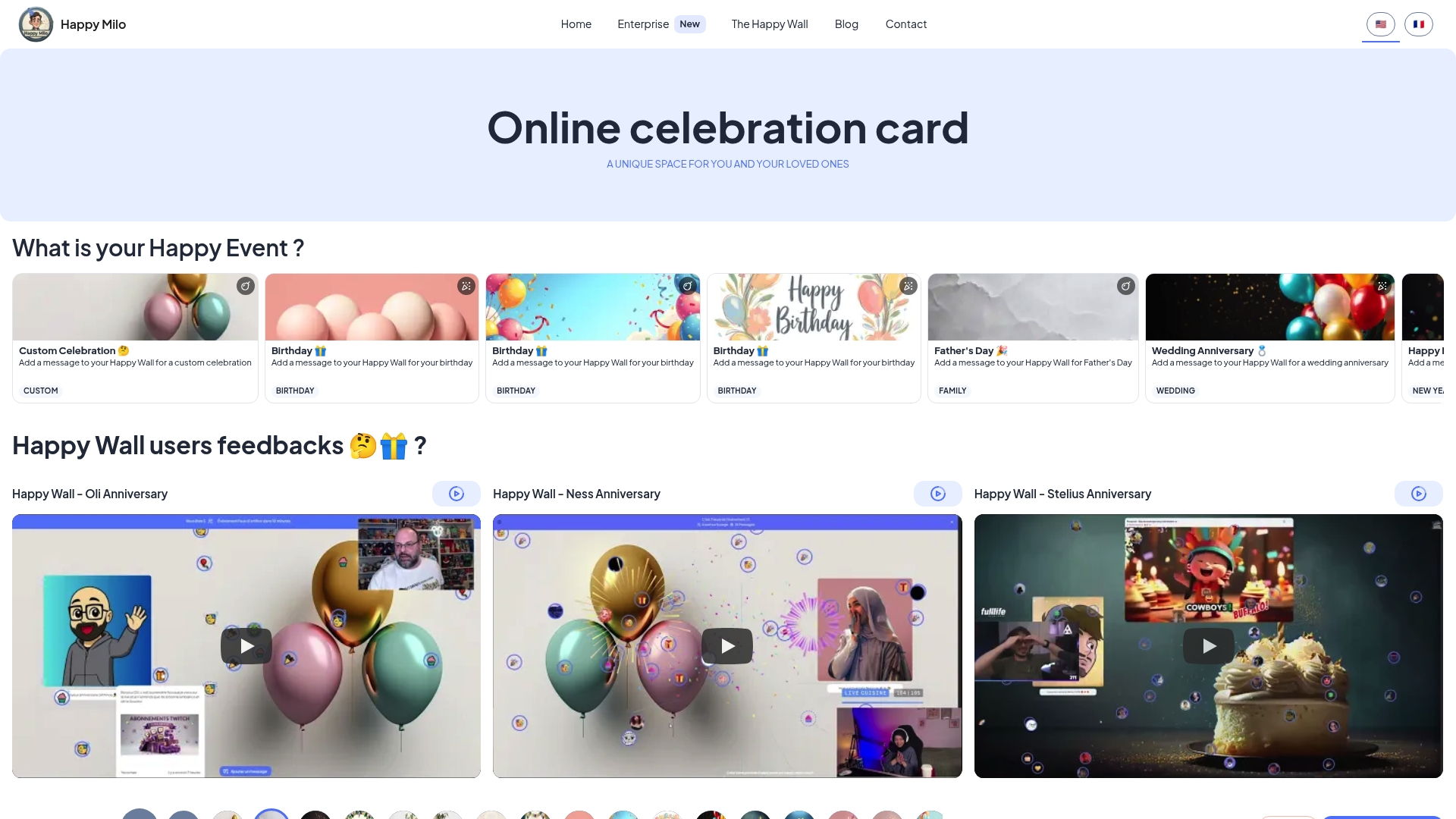
Every Happy Wall supports unlimited contributors, which means the cumulative effect of multiple personal messages works in your favor. You can add virtual animations and fireworks for that festive spark without overwhelming the personal content underneath. Happy-milo also includes a shared agenda so you never miss an important date. Whether you are celebrating a birthday across time zones or honoring a colleague's milestone, create a collective card on Happy-milo and give someone a birthday they will actually remember.
FAQ
Why do digital birthdays feel more personal than physical cards?
Digital birthday experiences allow multiple contributors to add personal messages, photos, and memories in one place. That combination of relational detail and group participation creates emotional closeness that a single physical card rarely achieves.
What makes a digital birthday message feel genuine and not automated?
Using the recipient's name, referencing a specific shared memory, and including contributions from people who know them personally are the factors that make digital messages feel genuine. Research on the minimal threshold personalization framework confirms that explicit, consciously provided details build trust while inferred data erodes it.
How many multimedia elements should a digital birthday include?
Limit digital birthday experiences to two or three media types. A 2026 study on multimedia emotional reactivity found that combining too many simultaneous sensory inputs produces no additional emotional benefit and can reduce the overall impact.
Does having more people contribute to a digital birthday card make it feel more personal?
Yes. Each personal message from a different contributor adds a separate signal that the recipient matters to that person. The cumulative effect of multiple contributors creates a sense of being celebrated by a community, which amplifies the emotional impact significantly.
What is algorithmic intimacy in the context of digital birthdays?
Algorithmic intimacy is the emotional attachment that forms when personalized digital content creates a sense of closeness between sender and recipient. A 2026 paper on AI-personalized marketing found this effect arises from narrative personalization, not just functional convenience.