


A collective message to colleagues is a coordinated group communication where multiple team members contribute individual voices into one unified expression of appreciation, celebration, or farewell. Unlike a solo note, this format amplifies emotional impact because it shows the recipient that an entire team took time to participate. Employees receiving regular, effective recognition are 2.7 times more likely to be highly engaged and 87% less likely to leave within a year. That single statistic explains why collective messaging has moved from a nice gesture to a genuine retention strategy. Whether your team is marking a farewell, welcoming a new hire, or celebrating a milestone, a well-crafted group message for coworkers creates a moment people remember for years.
What makes a collective message to colleagues more effective than individual notes?
A collective message works differently from a personal note because it signals community, not just individual goodwill. When ten people sign the same card or contribute to the same digital wall, the recipient experiences belonging at a group level. Organizational psychologist Andrew Williams describes this as "visibility at scale," the sense that your presence matters to the whole team, not just one person. That feeling is harder to manufacture with a solo message, no matter how well written.
The engagement data backs this up. Employees who feel recognized are significantly less likely to start a job search, and collective recognition is one of the most direct ways to create that feeling. The difference between a generic "Good luck!" and a structured group message is the difference between a formality and a memory.
So what separates a forgettable group message from one that genuinely moves people? Four qualities stand out:
- Specificity. Name the exact project, habit, or moment that made an impact. "You saved the Henderson pitch by staying late" beats "you always go above and beyond."
- Timing. Deliver the message at the peak emotional moment, during the farewell meeting, on the first day, or right after a milestone is announced.
- Authenticity. Contributions should sound like the people writing them, not a corporate template. Encourage contributors to write in their own voice.
- Inclusiveness. Invite every team member, including remote colleagues, contractors, and cross-functional partners who interacted with the recipient.
Structured prompts produce higher quality and more heartfelt contributions than open-ended requests. Asking "What is one thing this person does that makes your work easier?" generates far richer responses than "Write something nice."
Pro Tip: Send contributors a specific prompt alongside the invitation. One focused question removes the blank-page anxiety that causes people to skip participation entirely.
How to create and organize a collective message for celebrations and farewells
Creating a strong group message for coworkers is a process, not a spontaneous event. The quality of the final product depends almost entirely on how well you organize the collection phase. Here is a workflow that works for teams of five or fifty.
-
Assign a coordinator. A dedicated card coordinator manages invitations, follows up with slow contributors, and controls the final presentation. Without one person owning the process, messages arrive late, get lost, or never get delivered at all.
-
Choose your platform early. Your options range from a shared Google Doc to a digital message wall like Happy-milo's Happy Wall. The platform determines how many people can contribute, whether remote colleagues can participate easily, and how polished the final result looks. Pick the platform before you send a single invitation.
-
Set a clear deadline. Give contributors at least five business days but no more than ten. Too short and people miss it. Too long and they forget.
-
Send a structured prompt with the invitation. Include one or two specific questions alongside the link. For a farewell, try: "What is your favorite memory of working with this person?" For a welcome, try: "What are you most excited to work on together?"
-
Collect and curate. Review contributions for tone and length. A coordinator can lightly edit for clarity without removing the contributor's voice. Remove anything that feels generic or off-brand.
-
Present with intention. Reveal the message during a team meeting, send a surprise link via Slack or email, or display it on a shared screen during a celebration. The delivery moment matters as much as the content.
-
Archive it. Save the final message somewhere the recipient can revisit it. Happy-milo's digital message walls stay accessible online, so a farewell card from 2024 is still readable in 2026.
Collective messages that connect to company values turn greetings into engagement tools, not just formalities. When a welcome message references the team's actual mission or a shared project goal, it reinforces why the new hire chose this company. That framing matters.
Pro Tip: Ask contributors to tie their message to one company value or team goal. "Your attention to detail reflects exactly what we stand for" is more memorable than a generic compliment.
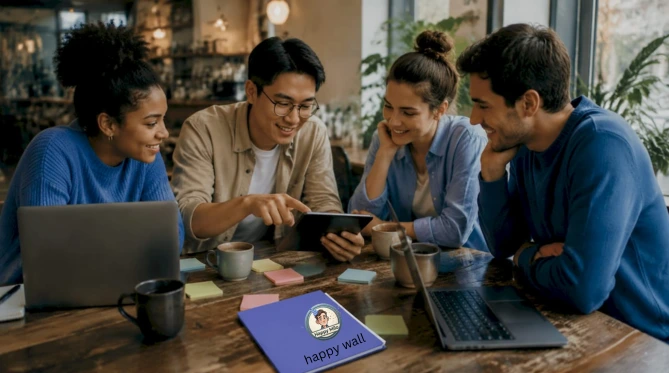
Comparing popular methods for collective team messaging
Not every team needs the same format. The right method depends on your team size, whether members are remote or in-person, your budget, and how much time the coordinator has. Here is a direct comparison of the four most common approaches.
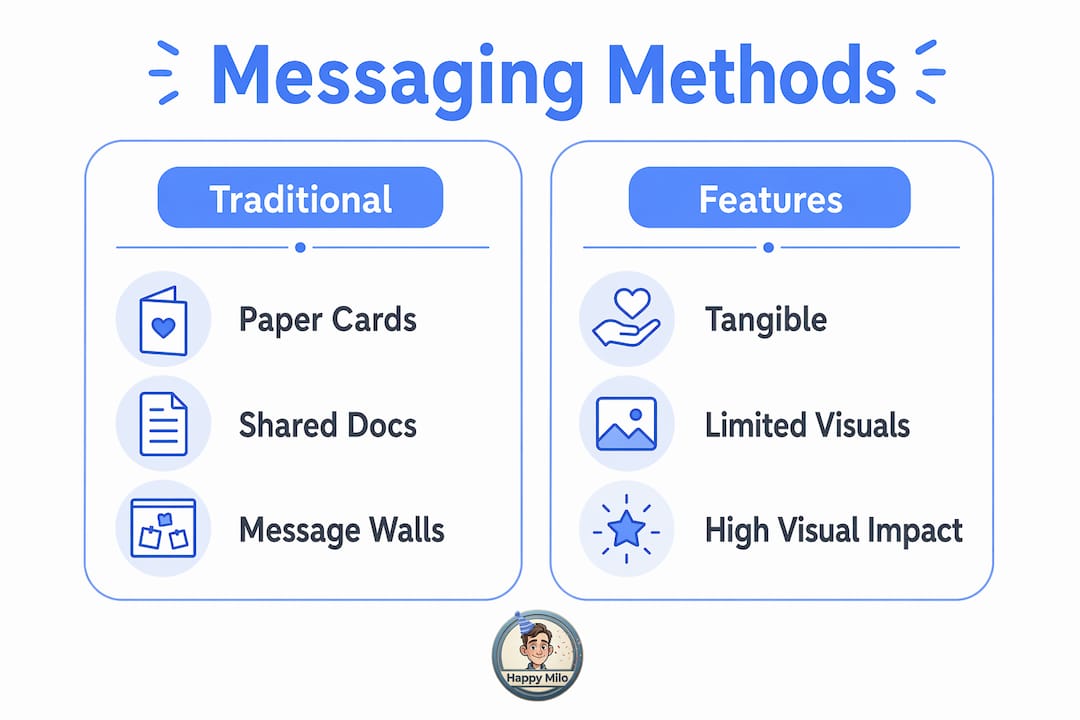
| Method | Pros | Cons | Cost | Best for |
|---|---|---|---|---|
| Paper card | Tangible, personal, no tech required | Limited space, excludes remote colleagues | Low | Small, co-located teams |
| Shared Google Doc | Free, familiar, easy to edit | No visual polish, feels informal | Free | Quick internal messages |
| Digital group card | Polished design, shareable link, photo support | Requires a platform account | Low to mid | Hybrid and remote teams |
| Message wall (Happy-milo) | Unlimited contributors, animations, asynchronous | Requires setup time | Low to mid | Large teams, milestone events |
Paper cards carry genuine warmth, but they physically exclude anyone not in the office. A remote colleague who cannot sign the card is a visible omission. Digital group cards with features like no login requirements, asynchronous contributions, and open sharing links solve this problem directly. Anyone with a link can contribute from any time zone.
Shared documents like Google Docs work in a pinch, but they lack the visual presentation that makes a collective message feel like a celebration rather than a meeting note. The format signals effort, and effort signals care.
Message walls, like those offered by Happy-milo, sit at the top of the scale for large teams or high-stakes occasions. They support photos, animated effects, and unlimited contributors, making them ideal for company-wide farewells or annual recognition events. Teams that use intentional rituals for onboarding and celebrations retain great people longer, and a well-designed message wall is one of the clearest expressions of that intentionality.
For privacy, reputable digital platforms use encrypted links and do not require recipients to create accounts. Always check that your chosen platform does not share contributor data with third parties before sending invitations.
Creative ideas and examples that make group messages memorable
The format matters, but the content is what people actually remember. The most effective collective announcements for employees go beyond "congratulations" and "good luck." They capture something true about the person and the team's shared experience.
Here are formats and themes that consistently generate strong responses:
- The memory wall. Each contributor shares one specific memory involving the recipient. "I still think about the time you stayed until midnight to fix the server before the product launch" is a story. Stories stick.
- The gratitude list. Each person names one specific thing the recipient does that makes their work better. This works especially well for farewell messages because it shows the recipient exactly what the team will miss.
- The inside joke section. Reserve a corner of the message wall for humor. A shared joke or a reference to a team meme signals that the recipient is truly part of the culture, not just a professional contact.
- The welcome forecast. For onboarding messages, each contributor shares one thing they are excited to work on with the new hire. This turns a welcome into a preview of belonging.
- The milestone timeline. For work anniversaries or project completions, contributors add one moment from each year or phase of the project. The result reads like a team scrapbook.
Collective messages that highlight specific contributions and shared memories increase warmth and participation from other contributors. When people see a specific, vivid message already posted, they write better messages themselves. Specificity is contagious.
Entertainment teams and startup cultures have used this approach effectively for years. At live events and productions, group recognition of teamwork creates a sense of shared accomplishment that outlasts the event itself. Wedding and event teams, like those celebrated by collaborative creative studios, regularly use collective messages to honor the behind-the-scenes contributors who rarely get public credit.
Inclusivity is the final ingredient. Invite people from adjacent teams, past managers, and cross-functional partners. A message wall that includes a note from someone the recipient worked with three years ago carries a different emotional weight than one that only includes the current direct team.
Key Takeaways
A collective message to colleagues works because it combines individual voices into a single, visible act of recognition that drives engagement, belonging, and retention far beyond what any solo message can achieve.
| Point | Details |
|---|---|
| Recognition drives retention | Employees who feel recognized are 2.7x more engaged and 87% less likely to leave within a year. |
| Structure improves quality | Specific prompts produce more heartfelt contributions than open-ended requests. |
| Digital tools include everyone | Message walls and digital group cards allow remote and hybrid team members to contribute equally. |
| Specificity creates impact | Messages that name exact memories or contributions are more memorable than generic praise. |
| Coordinator ownership matters | Assigning one person to manage the process ensures quality, timing, and smooth delivery. |
Bring your team's collective voice to life with Happy-milo
Happy-milo's Happy Wall is built exactly for this moment. Whether your team is sending off a beloved colleague, welcoming a new hire, or celebrating a five-year anniversary, the Happy Wall lets every team member contribute a message, photo, or memory at their own pace, from anywhere in the world. No logins required for contributors. No limits on the number of voices. The final wall arrives with virtual animations and a shareable link the recipient can revisit anytime.
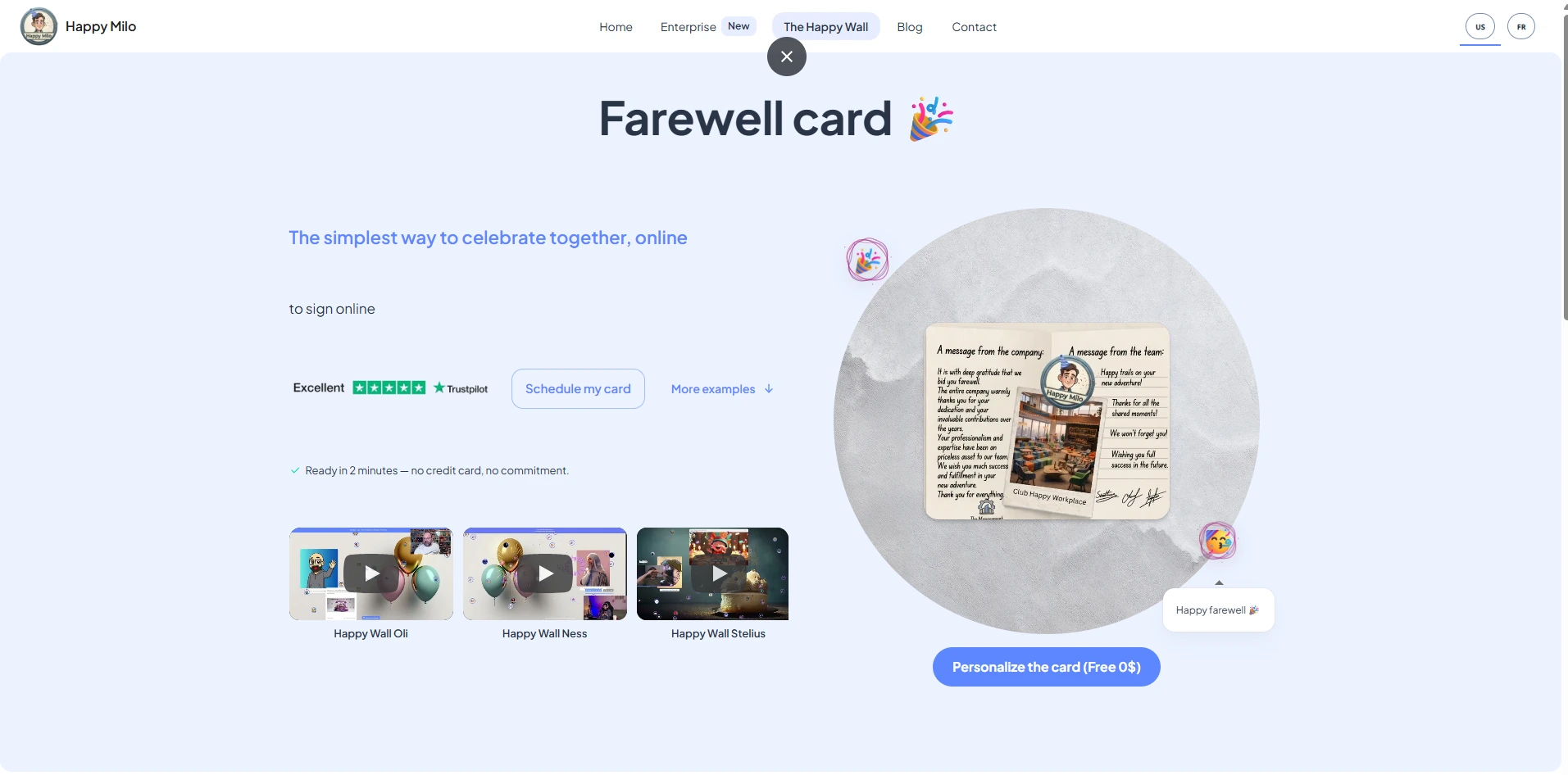
For companies managing multiple celebrations across the year, Happy-milo's enterprise team cards offer a scalable solution for farewells, onboarding, and milestone recognition. Start your first collective message today and give your team a celebration worth remembering.
FAQ
What is a collective message to colleagues?
A collective message to colleagues is a group communication where multiple team members contribute individual notes, memories, or wishes into one shared format, such as a digital card or message wall. It differs from a solo message because it represents the voice of the entire team.
How many people should contribute to a group message for coworkers?
There is no minimum or maximum. Even three or four contributors create a meaningful collective message, and digital platforms like Happy-milo's Happy Wall support unlimited contributors for large teams.
What is the best platform for collective communication with a team?
Digital message walls and group cards are the most effective for hybrid and remote teams because they allow asynchronous contributions via a shared link, with no login required. Digital group cards improve inclusion and participation compared to paper cards or shared documents.
How do structured prompts improve a shared message for staff?
Focused prompts like "What is one specific thing this person does that makes your work easier?" remove the blank-page problem and produce more specific, heartfelt responses than open-ended requests. Structured prompts consistently improve both the quality and the quantity of contributions.
Do collective messages actually improve employee engagement?
Yes. Employees who receive recognition are 2.7 times more likely to be highly engaged and 87% less likely to leave within a year. Collective messages are one of the most direct and visible forms of team recognition available to any organization.